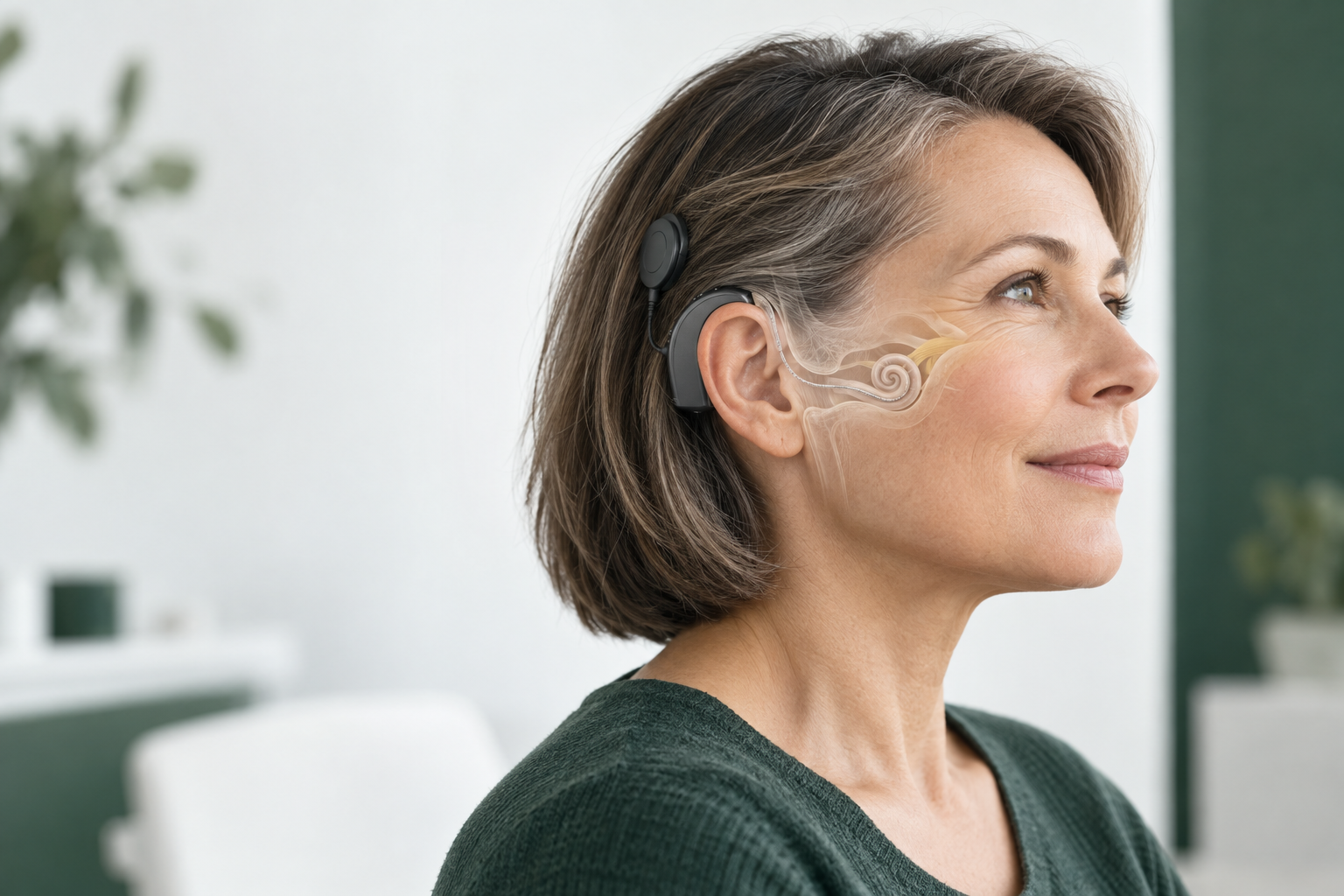
Cochlear implant
May be considered for significant sensorineural hearing loss when hearing aids do not provide adequate speech understanding.
Cochlear implants and other implantable solutions may be considered when hearing aids are insufficient or cannot be used. Suitability is determined by the specialist medical team.
AudioClinique is an official partner of Cochlear, MED‑EL and Advanced Bionics for implantable hearing solution pathways.
May be considered for significant sensorineural hearing loss when hearing aids do not provide adequate speech understanding.
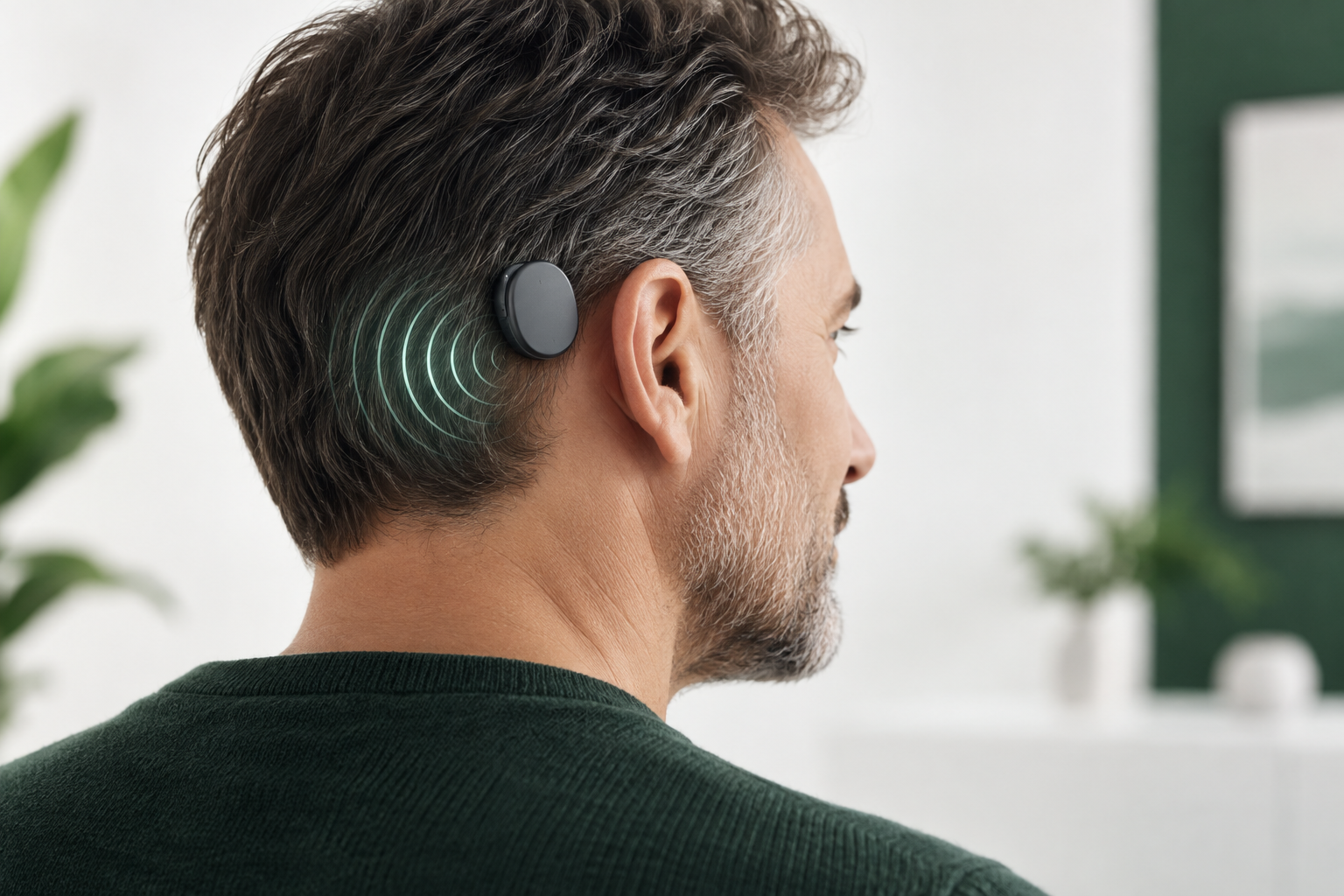
May be considered for conductive or mixed hearing loss and, in certain circumstances, single-sided deafness.
How bone conduction glasses work →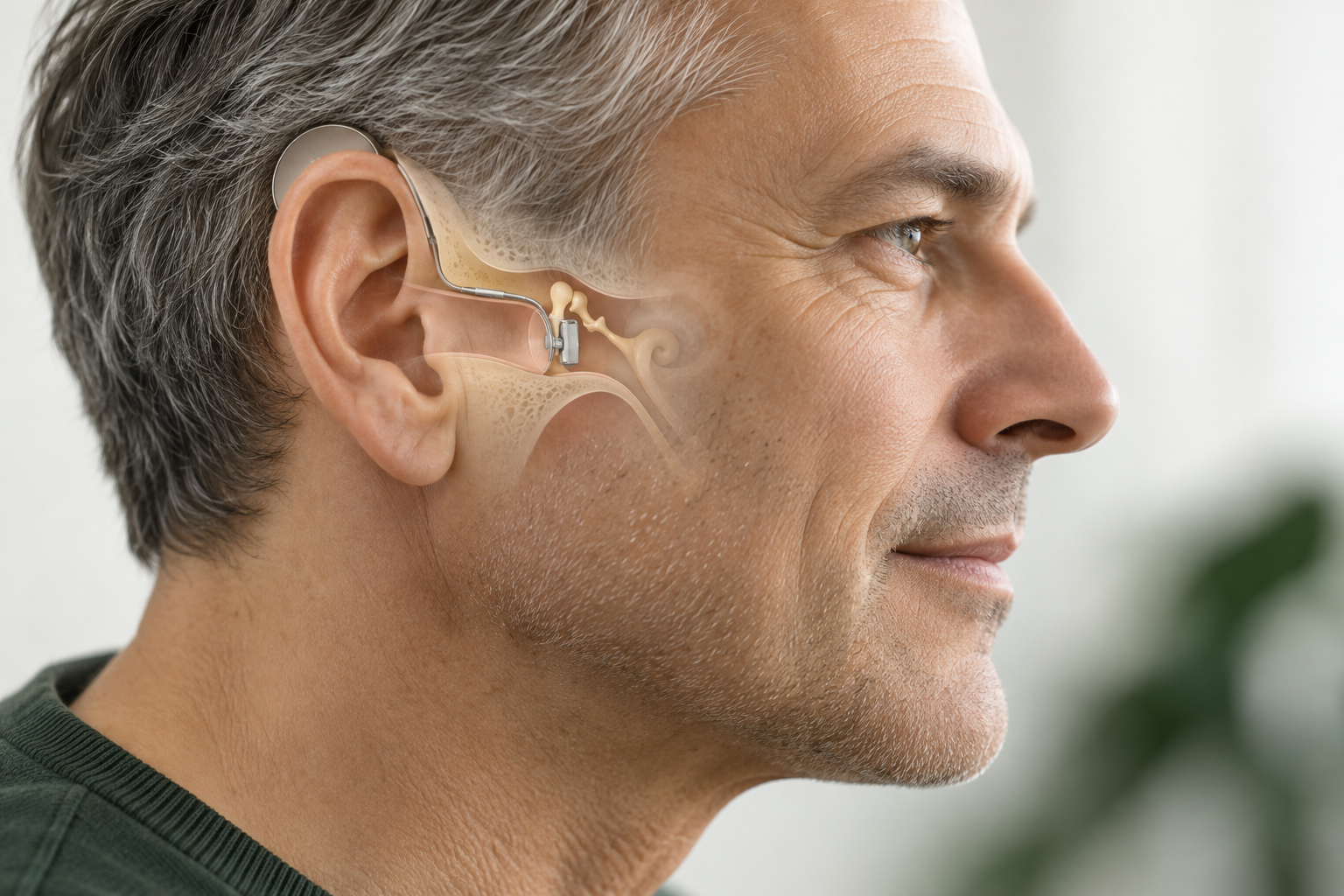
May be an option in selected cases when conventional hearing aids cannot be used, are not tolerated or are insufficient.
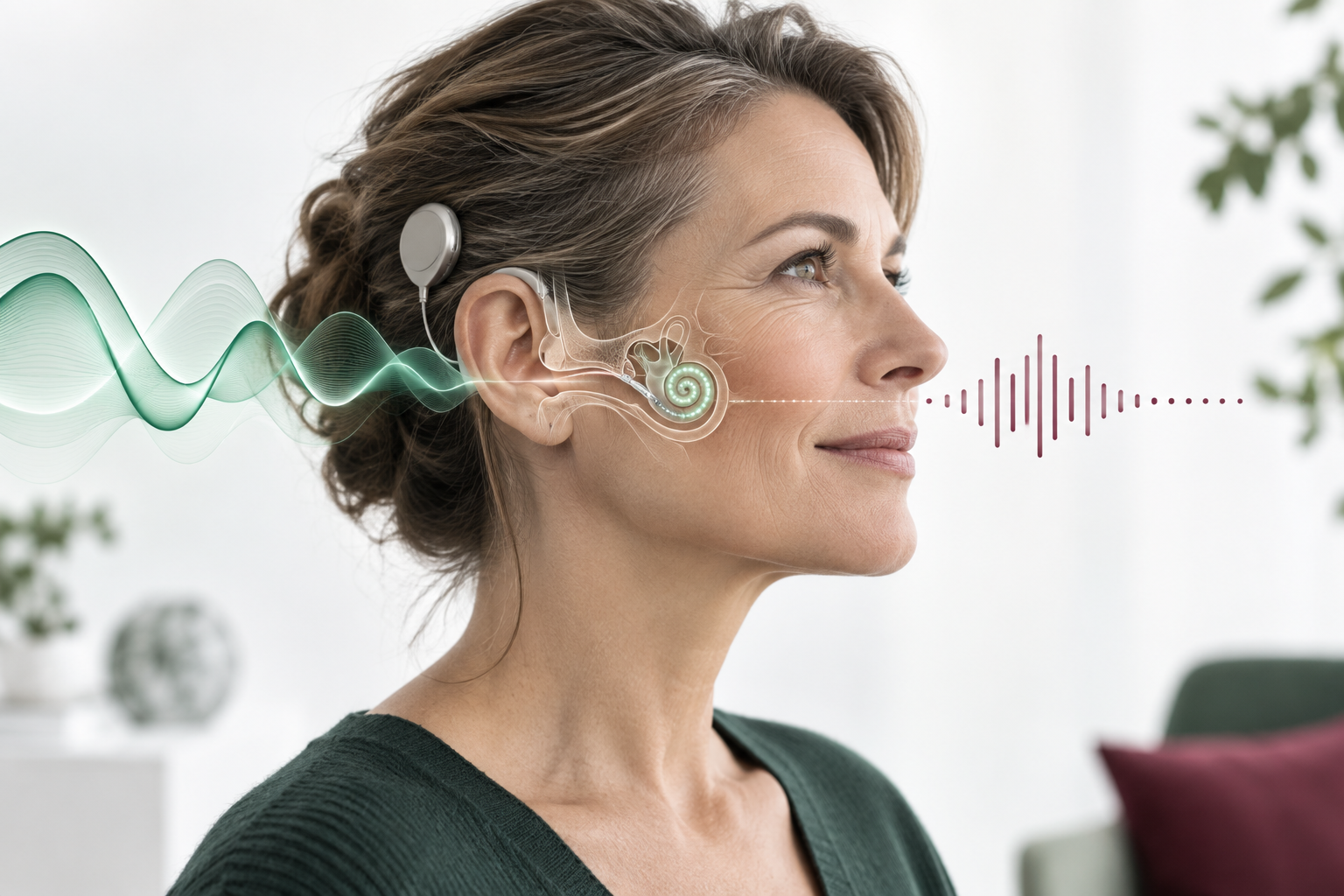
Combine electrical and acoustic stimulation and may be considered when usable low-frequency hearing remains.
Suitability always depends on an individual audiological and medical assessment by an implant team.
Bone conduction · the sound pathway
Sound becomes vibration and reaches the inner ear.
Simplified diagram, not to scale. Component positions vary by model. The waves show the pathway, not the hearing benefit.
Bone conduction glasses are an external solution with no surgical implant. An audiological assessment is essential to determine suitability.
Explore the audiological assessment →
Audioclinique assesses hearing, the benefit provided by hearing aids and the person’s real-life difficulties. When findings suggest an implantable solution may be appropriate, we support referral to the relevant specialist medical team.
We begin with your available test results and listening experience.